
Views: 0 Author: Site Editor Publish Time: 2026-06-02 Origin: Site


Procuring power tools for a professional fleet requires moving beyond basic spec sheets. For B2B buyers, investing in a reliable cordless reciprocating saw represents a significant multi-year commitment. Tool downtime and frequent maintenance cycles directly impact your labor costs and delay project timelines. Many consumer-grade models prominently display high voltage numbers to attract casual buyers. However, rigorous industrial evaluation demands a critical look at thermal management limits and internal housing stability. Evaluating these internal factors ensures your construction teams stay productive under exceptionally heavy workloads. We designed this comprehensive guide to provide procurement managers and tool-crib directors with an evidence-based evaluation framework. You will learn exactly how to assess internal builds, match technical specifications to actual site outcomes, and strictly manage battery cooling limits. Furthermore, this knowledge equips you to confidently select professional-grade gear for your entire fleet. Our evaluation framework prevents costly purchasing mistakes and ensures peak performance over a rigorous five-year lifespan.
Internal Build Over Exterior Specs: Heavy-duty performance relies on "Jampot" alloy housings rather than standard plastic clamshells to survive job site impacts.
Battery Architecture Matters: Standard operations require minimum 3.0Ah batteries to prevent continuous thermal shutdowns during heavy demolition.
Feature-to-Outcome Alignment: Features like variable speeds and orbital action aren't just perks—they directly dictate whether a tool can safely transition from framing lumber to cast iron plumbing.
Many procurement directors face a persistent scalability challenge. It is incredibly tough to differentiate between standard commercial tools and true heavy-duty industrial specifications. When you roll out a new cordless cutting tool across a massive regional fleet, internal housing construction becomes the primary durability anchor.
Avoid standard plastic "clamshell" housings for professional demolition teams. These basic plastic casings split under severe job site abuse. A clamshell design splits down the middle, relying on screws to hold the motor and gearing together. Under heavy vibration, these screws loosen rapidly. Instead, look for "Jampot" construction. A Jampot design uses a sealed alloy or metal gear housing. It encapsulates the transmission completely. It maintains perfect gear alignment under severe twisting torque. It also survives multi-story drop impacts onto concrete easily.
Standard brushed motors often fail in relentless fleet environments. The friction from carbon brush wear generates extreme internal heat. Higher operating temperatures destroy the motor windings quickly. Brushless motors are absolutely mandatory for modern industrial fleets. They use electronic circuit boards to manage power delivery, eliminating physical brush contact entirely. This transition lowers your long-term maintenance intervals significantly. You should easily target 2,000-hour comprehensive service intervals utilizing brushless architecture.
Gearing complexity also separates standard consumer models from industrial giants. Single-gear transmissions work adequately for general contractors performing basic tasks. However, dual-gear transmissions offer vital versatility for heavy industrial workloads. A dual-gear system provides a high-torque, low-speed setting specifically designed for cutting dense cast iron or stainless steel piping. Conversely, operators can switch to a high-speed, lower-torque gear for ripping through pine framing timber. This mechanical flexibility prevents motor burnouts across diverse applications.
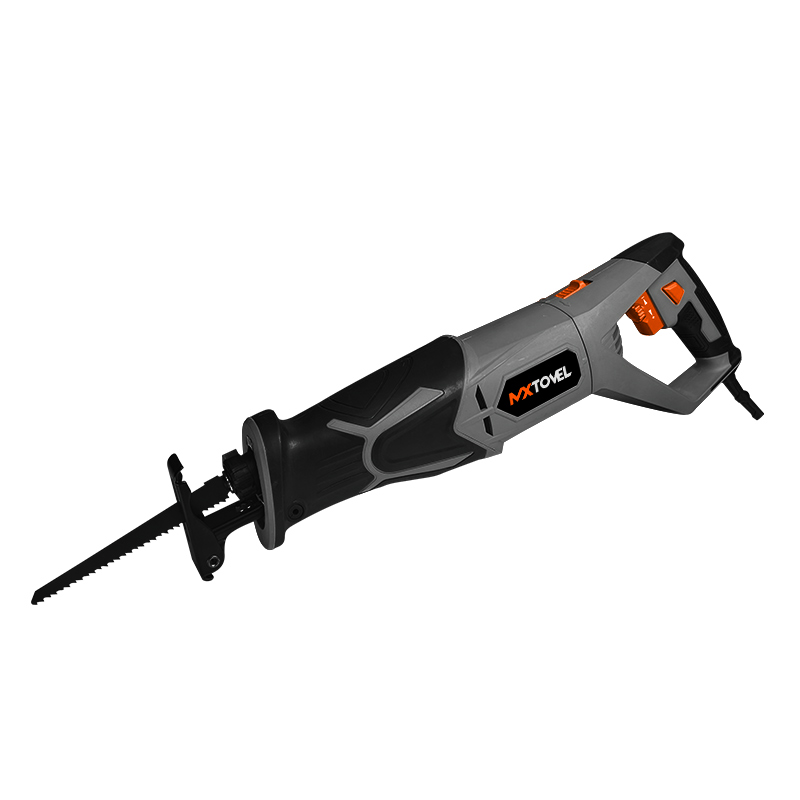
How do raw technical specifications translate into tangible job site outcomes? You must look beyond marketing claims and analyze the physical cutting mechanics.
Stroke length and Strokes Per Minute (SPM) operate as a critical tandem metric. You should always evaluate them together. A shorter stroke limits material removal per pass, while low SPM slows down the overall cut. We recommend evaluating the industry benchmark. A 1-1/8 inch stroke length combined with 2,400 to 3,000 SPM is ideal. This powerful combination represents the absolute sweet spot for aggressive demolition.
Let us discuss precision control. Deploying a reliable variable speed reciprocating saw is essential for multi-trade teams. Simple trigger-only control is totally insufficient for complex tasks. Operator fatigue often causes accidental full-throttle pulls. Dial-based speed limiters are critical to prevent catastrophic blade burning. You absolutely need this feature when operators switch from cutting soft wood to cutting dense, thick-walled metal.
Orbital action fundamentally changes the cutting physics. It introduces an aggressive elliptical motion to the blade path. The blade lifts slightly on the return stroke and digs forward on the push. This mechanical advantage exponentially speeds up clean wood and nail-embedded wood demolition. But it carries major operational risks. You must ensure the selected tool features a manual orbital-lockout switch. Using orbital motion on hard metal or brittle PVC pipe often shatters blades instantly. It can also severely damage the internal transmission components.
Understand your operational tool ecosystem boundaries clearly. A standard reciprocating saw is strictly designed for aggressive, rough-cut demolition. It excels at quick flush cuts and aggressive plunge cuts through drywalls. If you need precision angle cutting, tight cornering, or intricate curves, re-route that workflow immediately. Your installation teams must use a dedicated jig saw or miter saw for detailed aesthetic work instead.
Vibration management remains a crucial factor for large B2B fleets. You cannot ignore the physical toll these high-powered tools take on workers.
High tool vibration strongly correlates with severe operator fatigue over long twelve-hour shifts. Excessive shaking decreases cut accuracy rapidly. Worse, it increases potential workplace injury claims related to Hand-Arm Vibration Syndrome (HAVS). Protecting your operators ensures higher daily output and better safety compliance.
You must thoroughly evaluate the internal counter-balance mechanisms inside the tool housing. Do not settle for basic rubberized exterior grips falsely marketed as comprehensive "anti-vibration" solutions. Instead, look for true internal mechanical counterweights. Advanced systems like Active Vibration Technology (AVT) or Active Vibration Reduction (AVR) use dynamic counter-masses. A separate weight moves in the exact opposite direction of the blade stroke. This ingenious mechanical design absorbs the kinetic shock internally before it ever reaches the operator's hands.
Shoe adjustability heavily influences both ergonomics and consumable cost savings. A pivoting, heavy-duty shoe provides vital leverage against the workpiece. It stabilizes the cut, minimizes blade chatter, and prevents jarring kickbacks.
Tool-free extendable shoes offer fantastic consumable economics for your procurement budget. As blade teeth wear out on one specific section, operators simply push a button to extend or retract the shoe. This quick adjustment allows them to utilize completely fresh, unused sections of the blade. It significantly reduces your bi-metal blade fleet expenditures over a demanding fiscal year. Properly managing blade depth effectively doubles the lifespan of your accessories.
Let us summarize the direct ergonomic benefits for your fleet:
Reduces long-term nerve damage risks associated with sustained tool vibration.
Increases daily cutting output per worker by minimizing physical exhaustion.
Maximizes the consumable life of every blade through precise shoe depth adjustments.
Transitioning a commercial fleet from corded to cordless systems introduces complicated battery management realities. Modern high-tier cordless models certainly match the aggressive torque of traditional 15-Amp corded units. They eliminate dangerous trip hazards entirely, but they require strict power protocols.
Amp-Hour (Ah) minimums dictate real-world demolition success. Purchasing bare tools equipped with minimal 1.5Ah to 2.0Ah batteries is a major procurement mistake. These small, low-capacity packs result in frequent stalling and severe overheating during continuous work. Cutting through dense 2x4 arrays or thick metal plumbing pipes demands higher sustained amperage. The voltage droop on small batteries forces the motor to work harder, generating extreme internal heat.
We strongly recommend a minimum baseline of 3.0Ah to 5.0Ah platforms for any heavy-duty equipment. These larger packs feature more internal lithium-ion cells, distributing the thermal load evenly. They must include digital thermal overload protection circuitry to prevent catastrophic battery meltdown under load.
You should establish strict operational cooling protocols for your on-site fleets. Prolonged low-speed metal cutting generates massive internal heat because the cooling fan spins too slowly. We advise operators to run the tool at maximum speed under zero load for approximately sixty seconds. This simple action forces the internal fan to rapidly circulate ambient air and actively cool the motor down.
Below is a summary chart detailing recommended battery deployments based on workload intensity:
Battery Capacity (Ah) | Ideal Application Scope | Thermal Risk Level |
|---|---|---|
1.5Ah - 2.0Ah | Light plumbing, tight space trim cuts, drywall work | High (Stalls easily under heavy load) |
3.0Ah - 5.0Ah | Framing demolition, standard cast iron cutting, roofing | Low (Optimal balance of weight and power) |
8.0Ah - 12.0Ah | Continuous structural demolition, industrial rescue | Very Low (Heavy format but extremely resilient) |
Understanding lifecycle economics involves examining long-term durability metrics and standardizing your consumable supply chains. Evaluating these elements strategically protects your capital equipment investments.
Accessory standardization acts as a major economic driver for large fleets. You must mandate 1/2-inch universal shank compatibility across your entire tool crib. This standardization ensures blades remain interchangeable between different crews and machines. Furthermore, standardize your consumable procurement specifically around Bi-metal blades. Bi-metal construction welds incredibly hard high-speed steel teeth onto a flexible high-carbon steel body. They offer the perfect optimal mix of extreme flexibility for awkward flush cuts and unyielding durability against shattering. Avoid purchasing cheap High Carbon Steel (HCS) blades for industrial environments, as they snap easily under pressure.
Global compliance and structural future-proofing require strategic foresight from procurement teams. International buyers, distributors, and exporters must pay close attention to upcoming 2026 regulations. For example, the European Union's Carbon Border Adjustment Mechanism (CBAM) will mandate strict emissions tracking for all imported manufacturing goods. Additionally, Extended Producer Responsibility (EPR) reporting for industrial lithium-ion batteries will become increasingly mandatory across multiple global markets.
These evolving regulations may significantly affect your future supplier selection processes and alter import costs. Ensure your manufacturing partners maintain transparent supply chains and comply fully with these upcoming legal frameworks. Partnering with compliant manufacturers guarantees your fleet expansions will not face sudden customs delays or unexpected regulatory penalties.
Base your final procurement decisions on a solid triad of industrial principles. First, prioritize Jampot housing durability to guarantee ultimate internal impact resistance. Second, ensure long-term lifecycle value by investing strictly in brushless motor architecture. Third, carefully match your new tool battery platforms with your existing job site ecosystems. This seamless integration streamlines daily operations and reduces battery charger clutter.
Take actionable steps today to improve your purchasing strategy. We strongly recommend buyers audit their current blade replacement frequencies to identify hidden operational waste. Request pilot units from your trusted distributors before committing to massive fleet upgrades. Test the internal vibration control mechanisms directly on your hardest on-site materials. Finally, verify the thermal shut-off limits during prolonged metal cutting tests. Conducting proper on-site field testing guarantees your capital investment delivers flawless, uninterrupted performance for years to come.
A: One-handed compact models produce lower torque. They are suitable primarily for tight-space plumbing involving PVC or copper. Light electrical work also benefits from their lightweight size. Heavy demolition or framing strictly requires two-handed, full-size models. Two hands provide the necessary leverage, cutting stability, and maximum physical power transfer needed for aggressive tearing.
A: Prolonged low-speed cutting strains the internal motor heavily. It operates without generating enough internal fan speed to properly cool itself down. Operating the tool at high speed under no-load for a minute temporarily helps dissipate trapped heat. Always use specialized cutting oil for non-ferrous metals to reduce friction and lower blade temperatures.
A: Yes, they are absolutely worth the premium. Brushless motors completely eliminate physical carbon brush maintenance. They run significantly cooler under heavy loads by utilizing electronic power management. This superior efficiency dramatically extends battery run-time per charge. Choosing brushless motors reduces multi-year replacement expenses and keeps high-use B2B environments running smoothly without sudden tool failures.


