
Views: 0 Author: Site Editor Publish Time: 2026-02-18 Origin: Site


Have you ever struggled to push a heavy lawn mower across your yard? A self-propelled lawn mower can make lawn care effortless. These mowers use their own power to move forward, saving you time and energy. In this article, we’ll explore what makes a self-propelled lawn mower unique, how it works, and why it might be the right choice for your lawn. You’ll learn how to choose the best model based on your needs and terrain.
A self-propelled lawn mower is a type of mower that comes with a built-in drive system, allowing it to move forward without the user having to push it. The power to move the mower is generated by either a gasoline engine or an electric motor, which drives the wheels, making the mower move at a constant speed. This eliminates the need for the user to exert force to push the mower, particularly useful for larger lawns or uneven terrain.
These mowers come with multiple speed settings, allowing you to adjust the pace according to your preferences. They also typically offer various cutting heights and mulching capabilities, enabling you to customize your mowing experience. The result is a more efficient, less physically demanding lawn care process.
Self-propelled mowers are available in two main variants: gas-powered and electric. Gas-powered models are more powerful, making them better suited for larger lawns, while electric models are quieter, eco-friendly, and require less maintenance.
Understanding the different types of self-propelled lawn mowers will help you choose the right one for your needs. Here are the main types:
Type | Features | Ideal For |
Walk-Behind Mowers | Easy to maneuver, typically available in rear-wheel, front-wheel, or all-wheel drive | Smaller to medium-sized lawns |
Stand-On Mowers | Operator stands while mowing, increased comfort and maneuverability | Larger properties, hilly terrains |
Variable-Speed Mowers | Adjustable speed settings for better control | Versatile, adaptable for different terrains |
Fixed-Speed Mowers | Operates at a constant speed | Smaller or flatter lawns |
These are the most common and versatile type of self-propelled lawn mowers. They typically have rear-wheel, front-wheel, or all-wheel drive, allowing you to choose the one that best fits your lawn's needs. Rear-wheel-drive models are excellent for mowing on hilly lawns, while front-wheel-drive mowers are more maneuverable on flat surfaces.
Stand-on mowers are designed for commercial use but are also great for large residential properties. These mowers allow the operator to stand while controlling the mower, providing better comfort and visibility compared to walking behind the mower. They are perfect for tackling larger, more challenging lawns with steep inclines or rugged terrain.
Variable-speed mowers let you adjust the speed of the mower based on your needs. This feature is particularly useful for lawns with varying types of grass or uneven ground. For instance, slower speeds may be ideal for tall or thick grass, while faster speeds work well for short or flat lawns.
Fixed-speed mowers are simpler and less expensive than variable-speed mowers. They operate at a constant speed, making them best suited for smaller, flatter lawns where speed adjustment isn’t necessary.
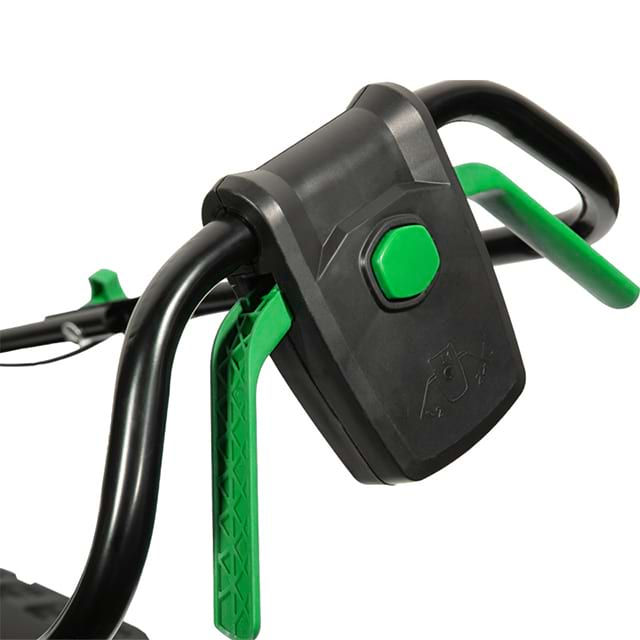
One of the most significant advantages of using a self-propelled lawn mower is the reduction in physical effort. Traditional push mowers require the user to apply force to move the mower forward, which can be tiring, especially on larger or sloped lawns. With a self-propelled mower, the motor does the hard work of moving the mower, so you can focus on guiding it in the right direction.
This makes self-propelled mowers particularly beneficial for seniors, people with physical disabilities, or anyone who wants to reduce the physical strain of lawn care. Even for younger individuals, the reduced effort allows for longer, more efficient mowing sessions.
Self-propelled mowers can save you time during lawn care. Since the mower moves under its own power, you don’t need to exert as much effort to push it, allowing you to mow faster. The motorized system maintains a steady pace, so you can maintain consistent speed throughout the process.
For larger lawns, this speed advantage is invaluable. You can complete the mowing task much quicker than with a push mower, allowing you to spend less time on maintenance and more time enjoying your outdoor space.
Feature | Gas Mowers | Electric Mowers |
Speed | Faster operation due to higher engine power | Typically slower, but quieter |
Runtime | Longer runtime, suitable for larger lawns | Requires recharging after a shorter period |
Maintenance | More frequent oil changes and upkeep | Lower maintenance requirements |
Noise Level | Noisier due to the engine | Quieter operation |
Tip: If you want even faster results, look for models with wider cutting decks and higher speed settings to maximize efficiency.
Self-propelled lawn mowers provide a more consistent mowing experience. The motor keeps the mower moving at a steady pace, preventing issues like slowing down or uneven cuts. This consistency is crucial for achieving a well-manicured lawn, particularly on larger areas or hilly terrain.
Additionally, many self-propelled mowers offer mulching capabilities. Mulching mowers shred grass clippings into fine particles, which are then deposited back onto the lawn. This process not only helps keep the lawn tidy but also provides a natural form of fertilization, enriching the soil and promoting healthier grass growth.
The self-propelled mechanism consists of several key components that work together to propel the mower forward:
● Drive Belt: The drive belt transfers power from the engine to the wheels, enabling the mower to move.
● Drive Wheels: These wheels receive power from the drive belt and are responsible for the mower’s forward motion.
● Clutch/Engagement System: This system allows the operator to engage or disengage the mower’s drive function, giving you control over when the mower moves.
When the engine is started, power flows through the drive belt to the drive wheels, causing the mower to move forward. The operator then guides the mower in the desired direction, adjusting the speed and cutting height as needed.
Adjusting the speed on a self-propelled lawn mower can significantly improve your mowing experience. Many models allow you to adjust the speed using a throttle or lever. For example, higher speeds are ideal for flat terrain, while slower speeds are better for uneven or hilly areas where you need more control.
● Gas-powered Mowers: Most gas mowers offer adjustable speed controls, allowing you to choose the optimal pace for your lawn.
● Electric Mowers: Electric mowers often have simpler speed controls, but newer models are incorporating variable-speed options to give users more flexibility.
Proper maintenance ensures that your self-propelled lawn mower remains in top condition throughout its lifespan. Regular upkeep can prevent costly repairs and maintain the mower’s performance.
Maintenance Task | Frequency | Benefits |
Check the Oil | Every 20-50 hours of use | Prevents engine wear and tear |
Inspect the Air Filter | Every 25 hours of use | Ensures proper engine function |
Clean the Deck | After each use | Prevents grass buildup and clogs |
Sharpen the Blades | At least once a year | Ensures clean, even cuts |
● Tip: Keep the mower deck free from grass buildup by cleaning it after each use. This prevents clogs that can impair mower performance.
To maximize the lifespan of your self-propelled lawn mower, follow these additional tips:
● Sharpen the Blades Regularly: Dull blades can result in uneven cuts and put extra strain on the engine. Sharpen your blades at least once a year or whenever they become dull.
● Store the Mower Properly: During the off-season, store your mower in a dry, cool place to prevent rusting and other damage. For battery-powered models, make sure to remove and store the battery in a cool place to prevent it from draining.
● Inspect Parts for Wear: Regularly inspect the mower’s wheels, drive belt, and other components for signs of wear. Replacing worn-out parts early can prevent bigger issues down the line.
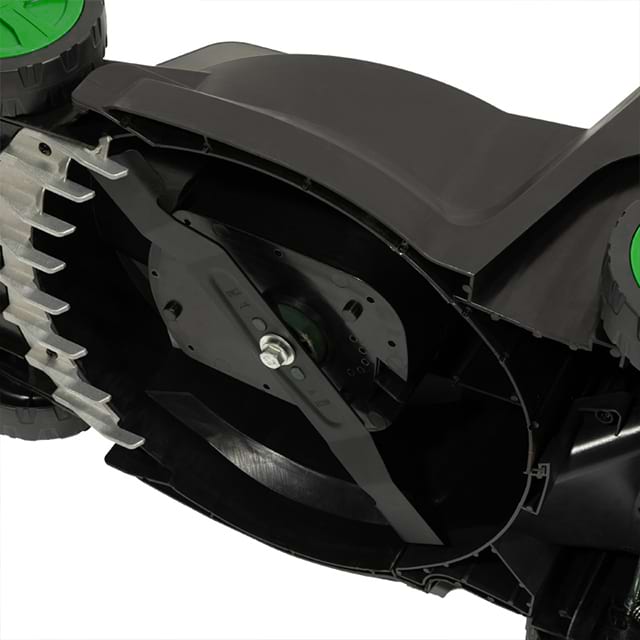
One of the most common mistakes people make when using a self-propelled lawn mower is not adjusting the speed according to the lawn conditions. A self-propelled mower typically comes with adjustable speed settings, and using the correct speed is crucial for achieving the best results.
● Faster Speeds: Faster speeds are perfect for flat or even lawns. They allow you to cover more ground quickly and efficiently, as the mower moves with less resistance. However, if you use a high speed on uneven terrain or thick grass, you might not get a clean cut.
● Slower Speeds: Slower speeds are better suited for uneven or hilly areas where you need more control. They allow the mower to move more steadily and prevent it from bouncing or skipping over rough patches. Slower speeds also work well for thicker grass, giving the mower more time to cut and process the grass properly.
Failing to adjust the speed correctly can lead to poor mowing results. On uneven ground, for example, using a high speed may cause the mower to struggle or miss patches of grass. Additionally, for electric models, using high speeds without considering battery life can lead to unnecessary battery drain, requiring more frequent recharges. Always adjust the speed to match the terrain for the best performance.
Skipping regular maintenance tasks is another common mistake that can reduce the performance and lifespan of your self-propelled lawn mower. Regular upkeep is crucial to ensure your mower operates smoothly and efficiently. Here are some essential maintenance tasks to avoid neglecting:
● Cleaning the Deck: Grass clippings, dirt, and debris can accumulate under the mower deck over time, affecting the mower’s performance. If left unchecked, this buildup can cause clogs and reduce airflow, which could lead to poor cutting results and engine strain. Cleaning the deck after each mowing session is essential to keep it functioning properly.
● Sharpening the Blades: Dull blades can tear grass instead of cutting it cleanly, leaving your lawn looking uneven. Sharp blades are essential for achieving a neat, professional-looking lawn. Sharpening the blades at least once a year, or as needed, is crucial to maintain the quality of your lawn care.
● Checking the Engine Oil: For gas-powered mowers, the oil plays a vital role in keeping the engine running smoothly. Over time, the oil breaks down and can cause engine wear if not replaced. Regularly checking and changing the oil ensures the engine runs efficiently and prevents costly repairs.
● Inspecting the Drive System: The drive system, including the belts and wheels, should be checked regularly for wear and tear. If any parts are damaged or worn out, it can affect the mower's ability to move effectively, especially on uneven terrain.
Neglecting these maintenance tasks can lead to a decline in mower performance, potentially causing breakdowns or reduced efficiency. By maintaining your mower regularly, you can extend its lifespan, improve its performance, and ensure a smoother mowing experience.
In conclusion, a self-propelled lawn mower is an excellent tool for efficient and easy lawn care. With features like adjustable speed, easy maneuverability, and reduced physical effort, it helps maintain a pristine lawn with minimal effort. Nanjing Metalwell Machinery Equipment Co., Ltd. offers high-quality lawn mowers that provide lasting value with reliable performance. Their products are designed to make your lawn care tasks smoother and more enjoyable.
A: A self-propelled lawn mower is a type of mower that moves forward automatically, using its own motorized drive system, so you don’t have to push it, making lawn care easier.
A: The mower is powered by either a gas or electric motor that drives the wheels. When you engage the drive system, the mower moves forward, and you only need to guide it.
A: Self-propelled mowers reduce physical effort, make mowing faster, and are more efficient on larger lawns or uneven terrain, making them ideal for those with big yards or hills.
A: Regular maintenance includes checking the oil, cleaning the mower deck, inspecting the blades, and ensuring the drive belt is in good condition. This ensures optimal performance and longevity.
A: Yes, a self-propelled lawn mower is ideal for larger lawns, hilly terrains, or uneven ground, but it can also be used for smaller lawns for a more efficient mowing experience.


