
Views: 0 Author: Site Editor Publish Time: 2025-10-26 Origin: Site


Miter saws have become an essential tool in woodworking, carpentry, and home improvement projects. They are designed to make precise crosscuts, bevel cuts, and compound cuts in a variety of materials, including wood, plastics, and certain metals. The evolution of miter saws has introduced two main types: corded miter saws, which rely on a continuous electrical supply, and cordless miter saws, which are powered by rechargeable batteries.
The emergence of cordless miter saws has revolutionized the industry by offering increased flexibility, portability, and convenience. With modern battery technology, these tools now provide power levels comparable to their corded counterparts while offering the freedom to work anywhere without being restricted by cords. This guide will provide an in-depth comparison of cordless and corded miter saws, helping you understand the key differences, advantages, and considerations for choosing the right tool for your projects.
A cordless miter saw is a battery-powered saw designed for precision cutting without the limitations of a power cord. These tools have gained popularity due to their portability and ability to work in environments where access to electricity may be limited.
Cordless miter saws operate using rechargeable lithium-ion batteries that power an electric motor. The motor drives a spinning circular blade that makes accurate cuts at adjustable angles. Modern cordless saws often feature brushless motors, which increase efficiency, reduce heat buildup, and extend motor life.
Portability: Lightweight and easy to transport.
Battery-Powered: No cords, allowing work in remote locations.
Adjustable Angles: Capable of miter, bevel, and compound cuts.
Safety Mechanisms: Include blade guards, electric brakes, and ergonomic handles.
Precision Guides: Laser or LED guides for accurate cutting alignment.
Cordless miter saws are ideal for home DIY projects, professional carpentry, and on-site construction, especially in locations without ready access to power outlets. Their versatility and flexibility make them a preferred choice for modern woodworking.
A corded miter saw is a traditional miter saw that draws continuous power from an electrical outlet. These saws are known for their reliability and consistent performance, making them a staple in professional workshops and construction sites.
Corded miter saws operate using alternating current (AC) from a wall outlet. This allows the motor to maintain a consistent speed and torque throughout the cutting process, providing powerful and reliable performance, particularly for heavy-duty or long-duration projects.
Continuous Power Supply: No need to worry about battery depletion.
High Torque Motors: Capable of cutting dense materials efficiently.
Stable Performance: Consistent blade speed ensures smooth cuts.
Durability: Often heavier and more robust for long-term use.
Corded miter saws excel in workshops, fabrication shops, and professional environments where consistent power and extended usage are required. Their main limitation is mobility, as the tool is tethered to an outlet.
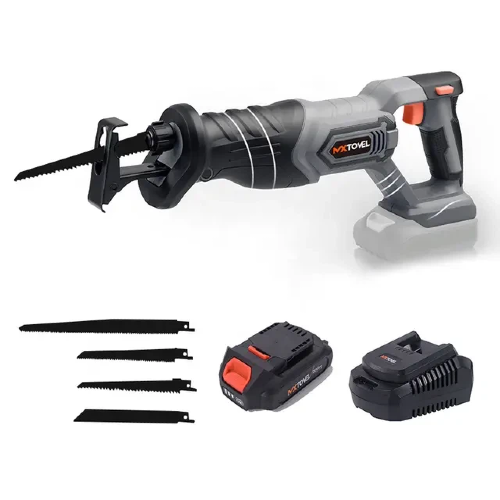
Comparing cordless and corded miter saws requires a careful evaluation of multiple critical factors that affect performance, convenience, and suitability for different projects. Both types of saws have distinct advantages and limitations, making it important to understand how each feature aligns with your specific needs. The following table provides a detailed comparison:
Feature | Cordless Miter Saw | Corded Miter Saw |
Portability | High, can work anywhere | Low, limited by cord length |
Power | Moderate to high, depends on battery | Consistent high power |
Runtime | Limited by battery capacity | Continuous, unlimited |
Maintenance | Requires battery care | Minimal, no battery management |
Noise & Vibration | Usually quieter, less vibration | Slightly louder, higher vibration |
Setup & Mobility | Quick setup, highly mobile | Requires outlets or extension cords |
Ideal User | DIYers, field workers, small to medium jobs | Workshop professionals, heavy-duty projects |
This comparison clearly highlights the key trade-offs between portability and continuous power. Cordless miter saws are highly flexible, allowing users to set up and cut materials virtually anywhere, which is especially advantageous for outdoor or remote work sites. The lightweight design and absence of cords make them easy to transport and reposition, reducing setup time and increasing overall efficiency. However, cordless saws are limited by battery life, and their power output can vary depending on the charge and battery capacity.
In contrast, corded miter saws provide consistent, uninterrupted power, making them ideal for heavy-duty and long-duration projects. They offer stable performance and high torque, which ensures smooth, precise cuts in dense materials. The main drawback is mobility, as these saws must remain near a power outlet or rely on extension cords, which can limit flexibility and make setup more cumbersome. Ultimately, the choice depends on whether portability or sustained power is the priority for your work.
Cordless miter saws are designed for mobility. They allow users to work in any location without the need for extension cords or generators. Their compact size and lightweight construction make them easy to transport, ideal for fieldwork or outdoor projects.
Modern cordless saws use high-capacity lithium-ion batteries ranging from 18V to 60V. These batteries provide sufficient power to handle most woodworking tasks. Brushless motor technology enhances efficiency by reducing energy loss, increasing runtime, and minimizing maintenance.
Cordless saws often come with advanced safety features, including electric brakes that stop the blade instantly, ergonomic handles for better control, and blade guards to prevent accidents. Laser and LED guides improve cutting accuracy, making them safer and easier for both beginners and professionals.
Cordless miter saws can handle light to medium cutting tasks, including framing, trim work, and wood furniture projects. They are particularly useful in remote locations where power outlets are unavailable.
Cordless saws are more environmentally friendly due to reduced reliance on electrical cords and the ability to recharge batteries multiple times. Proper battery care ensures longevity, reducing waste and energy consumption.
Corded miter saws provide a consistent, uninterrupted power source, making them ideal for tasks requiring long-duration operation. They can handle larger, denser materials without performance loss.
The motor in corded saws maintains a consistent speed, delivering powerful torque for cutting through thick boards or hardwoods. This ensures smooth, precise cuts in demanding applications.
Corded saws are generally heavier and more robust, providing better stability during operation. This weight also helps minimize vibrations, improving cutting accuracy and comfort during prolonged use.
Compared to cordless models, corded saws are typically less expensive due to the absence of batteries and electronic management systems. Maintenance is also simpler, as there is no need to replace or manage batteries.
Selecting the right miter saw depends on several factors:
Indoor or Workshop Use: Corded saws are ideal due to consistent power availability.
Outdoor or On-Site Projects: Cordless saws excel in mobility and convenience.
Consider the materials you plan to cut. Heavy-duty cutting of thick boards may require the sustained power of a corded saw, whereas moderate cutting tasks can be handled effectively by a cordless saw.
If you frequently move between job sites or need portability, a cordless miter saw is the better choice. Corded saws are suitable for stationary work environments.
Cordless saws typically have higher upfront costs due to batteries and advanced motors. Corded saws are less expensive but may lack the mobility required for certain tasks.
Corded saws require minimal maintenance, while cordless saws need proper battery care to ensure longevity and consistent performance.
Cordless saws are weak – Modern lithium-ion batteries and brushless motors deliver power comparable to corded models.
Corded saws are always superior – While they provide sustained power, they lack portability and convenience.
Price determines performance – Performance depends on motor type, blade size, battery capacity, and build quality, not just cost.
Understanding these misconceptions helps buyers make informed decisions based on actual project needs rather than assumptions.
Choosing the right miter saw depends on your project type, workspace, power requirements, and budget. Cordless miter saws provide unmatched portability and flexibility, allowing users to work efficiently in locations without electricity. They are ideal for DIY enthusiasts, field workers, and small to medium projects where convenience and mobility are key. In contrast, corded miter saws deliver continuous power, high torque, and stability, making them the preferred choice for professional workshops and heavy-duty cutting tasks that demand consistent performance.
For anyone looking for high-quality cordless miter saws or other professional-grade power tools, Nanjing Metalwell Machinery Equipment Co., Ltd. offers a wide range of reliable, durable, and high-performance solutions. Their products are designed to meet the needs of both hobbyists and professionals, providing precision, efficiency, and long-lasting performance. Whether you are seeking a cordless miter saw for everyday projects or exploring custom OEM/ODM options tailored to your specific requirements, Metalwell’s experienced team is ready to provide expert guidance, product information, and personalized support to help you find the perfect tool for your work.


